Quick Answer
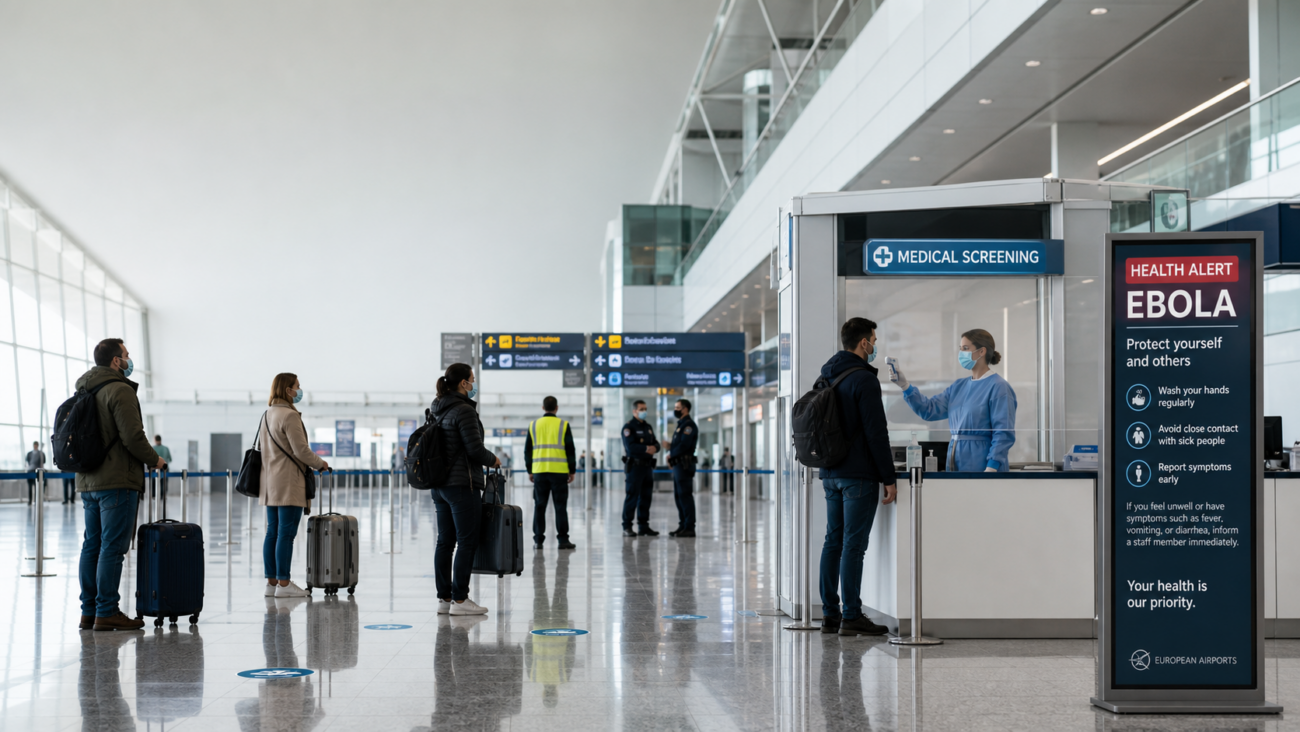
When an Ebola outbreak triggers international health alerts, European airports activate a combination of public-health, aviation, and emergency-response procedures designed to identify potential risks while keeping transport systems operational. These measures can include health monitoring, coordination with airlines, isolation protocols for suspected cases, passenger information procedures, and communication with national health authorities. Most travellers never notice these systems directly because they are designed to operate quietly in the background. The goal is not to create panic or shut down mobility, but to reduce risk through structured preparedness, rapid coordination, and clear operational planning.
Why Ebola Still Matters to European Transport Systems
Although Ebola outbreaks are usually geographically limited and most often occur in parts of Central or West Africa, international aviation means infectious diseases can quickly become global concerns. European transport systems are deeply connected to international passenger and cargo networks, which means airports must maintain preparedness for high-risk public-health events even when the direct risk to the wider population remains low.
Ebola is also treated differently from many other infectious diseases because of its severity and the operational challenges involved in handling suspected cases safely. Even a small number of potential cases can require coordination across airports, airlines, emergency services, laboratories, hospitals, and public-health agencies.
For transport operators, the issue is not simply disease control. It is maintaining operational continuity while managing uncertainty and protecting both staff and passengers.
What Triggers an Ebola Alert at an Airport?
European airports do not independently declare Ebola emergencies. Responses are usually linked to guidance and risk assessments from organisations such as the World Health Organization (WHO), national public-health agencies, and the European Centre for Disease Prevention and Control (ECDC).
An airport response may become more active when:
- A significant outbreak is identified internationally
- A passenger is reported ill during a flight
- A traveller arrives from a high-risk area with symptoms
- Airlines notify authorities about onboard medical concerns
- National health authorities raise preparedness levels
Most responses begin with information-sharing rather than visible passenger restrictions.
How Airlines and Airports Coordinate During a Health Alert
Airports and airlines operate through structured communication systems during potential infectious disease incidents. Cabin crew are trained to report certain medical situations before landing, allowing airport authorities and health officials to prepare before the aircraft reaches the gate.
If a passenger shows symptoms associated with a high-risk disease, airlines may:
- Limit movement around the passenger where possible
- Use onboard protective equipment
- Record seating proximity information
- Notify destination airport authorities before arrival
- Coordinate with emergency medical teams on landing
Most of these procedures are designed to minimise confusion and maintain calm among passengers while ensuring that health teams receive accurate information quickly.
Isolation Procedures Inside Airports
Many major European airports maintain designated areas where potentially ill passengers can be assessed away from crowded public spaces. These are not large quarantine zones like those often portrayed in films. In most cases, they are controlled medical or holding areas designed for short-term assessment until healthcare professionals arrive.
Airport isolation procedures usually focus on:
- Reducing unnecessary contact with others
- Protecting airport and medical staff
- Allowing safe medical evaluation
- Supporting transport to specialised healthcare facilities if required
The process is heavily protocol-driven because clarity and coordination are more important than speed alone during uncertain situations.
What Role Does the ECDC Play?
The European Centre for Disease Prevention and Control (ECDC) helps coordinate disease surveillance, risk assessment, and information-sharing across European countries.
During major international outbreaks, the ECDC may:
- Publish updated risk assessments
- Support preparedness guidance for transport operators
- Coordinate information between member states
- Provide technical recommendations on screening and response
- Monitor cross-border health developments
This coordination is important because modern transport systems operate across national boundaries. A fragmented response creates confusion quickly.
Passenger Screening and Health Checks
One of the most publicly visible aspects of outbreak preparedness is passenger screening. However, the effectiveness and practicality of screening methods vary depending on the disease involved.
During some outbreaks, airports may introduce:
- Health information notices
- Traveller questionnaires
- Temperature monitoring
- Visual assessment by health teams
- Enhanced communication campaigns
These measures are generally designed to identify potentially symptomatic travellers and encourage reporting rather than create a perfect detection system.
Public-health experts have long noted that airport screening alone cannot eliminate risk completely, particularly because some diseases have incubation periods where symptoms are not immediately visible.
Why Communication Matters During High-Risk Outbreaks
One of the biggest operational lessons from recent public-health events is that poor communication creates disruption faster than disease itself.
Airports must balance several competing pressures during outbreaks:
- Providing accurate information quickly
- Avoiding unnecessary panic
- Maintaining public trust
- Supporting staff confidence
- Keeping transport systems functioning
Communication failures can lead to confusion among passengers, inconsistent procedures between agencies, and operational bottlenecks that affect entire terminals.
How COVID-19 Changed Airport Preparedness
The COVID-19 period significantly expanded how airports think about health resilience. Before 2020, many infectious disease preparedness plans existed largely as specialised emergency frameworks that were rarely activated.
COVID changed this by forcing airports to integrate public-health planning into routine operations. This included:
- Ventilation upgrades
- Crowd-flow redesign
- Health communication systems
- Enhanced cleaning protocols
- Coordination exercises with public-health agencies
As a result, many airports are now operationally better prepared for high-risk disease scenarios than they were a decade ago, even if Ebola itself remains relatively rare in Europe.
Why Transport Hubs Are Part of the Public-Health System
Airports are often described primarily as transport infrastructure, but large mobility hubs also function as public-health environments. They connect international populations, concentrate large numbers of people in shared indoor spaces, and operate continuously across borders and jurisdictions.
This means preparedness cannot focus only on hospitals or healthcare systems. Public-health resilience also depends on how transport infrastructure is designed, maintained, and coordinated during periods of uncertainty.
The challenge is not preventing all risk entirely. The challenge is reducing vulnerabilities while keeping essential systems functioning.
Frequently Asked Questions
Can Ebola spread easily through airports?
No. Ebola is not an airborne virus like influenza or COVID-19. Transmission usually requires direct contact with bodily fluids from an infected person who is showing symptoms.
Do European airports screen passengers for Ebola?
Screening measures depend on the scale of the outbreak and guidance from public-health authorities. Some airports may introduce targeted health monitoring or information procedures during elevated risk periods.
What happens if a passenger becomes ill during a flight?
Cabin crew follow medical reporting protocols and notify airport authorities before landing if necessary. Medical teams may meet the aircraft and assess the passenger separately from other travellers.
Are airports prepared for high-risk disease incidents?
Major airports maintain emergency-response and public-health coordination plans, although preparedness levels and infrastructure capacity vary between locations.
Why is Ebola discussed in transport preparedness if cases in Europe are rare?
Ebola is treated as a high-consequence disease scenario that helps test coordination, response systems, and operational readiness across international transport networks.
Ebola alerts are not only about one disease or one region. They are stress tests for how modern transport systems respond to uncertainty, coordination challenges, and public-health risk in highly connected environments. Most passengers will never directly encounter these systems in action, but the ability to activate them quickly and calmly has become an increasingly important part of transport resilience across Europe.
